The Form is Not the Finish Line: How Marine OEMs Can Nurture Buyers Before Dealer Handoff
For many marine OEMs, the lead process appears straightforward. A prospective buyer discovers a brand, explores a model, completes a form, and enters a dealer’s queue. The OEM has generated an inquiry, and the dealer is expected to take it from there.
The sequence is orderly, but it can ask for a sales conversation before the buyer is ready to have one.
A form submission expresses interest; it does not establish purchase readiness. A buyer may still be comparing models, considering how family members will use the boat, weighing options and financing, or trying to understand what ownership would demand of them. When every inquiry goes straight to a dealer, the OEM risks confusing a buyer’s timing with the quality of the lead. The dealer receives a legitimate prospect who may have little to say yet, while the OEM falls silent during a period when that prospect is still making up their mind.
The form is the beginning of a visible buying journey. What happens after it should help the buyer move toward a useful dealer conversation.
The cost of an early dealer handoff
Immediate routing can look responsive in a dashboard while creating friction in the actual conversation.
A prospect may receive a call before knowing which questions to ask. A dealer may read the ensuing silence as a lack of intent, and the OEM may then regard the inquiry as a weak lead. Yet the interest was real; what was missing was a way to support it through the interval between curiosity and a decision.
The OEM and dealer have complementary roles in that interval. The OEM can create demand, explain the product, and sustain confidence in the brand. The dealer can help a buyer test fit, see a boat in person, discuss availability and price, and complete the purchase. Those roles work best when a handoff responds to the buyer’s progress rather than the mere existence of a contact record.
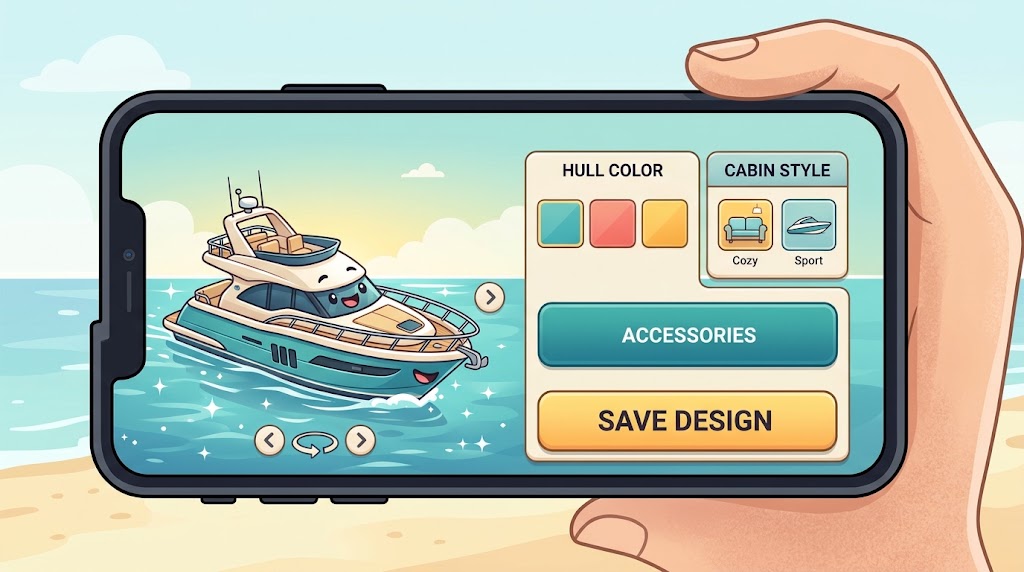
That progress may take days, weeks, or months. In an anonymized boatbuilder’s configurator-to-owner analysis, the median time from an online builder session to a verified registration was 117 days, and 68% of attributed buyers registered within six months. The implication is more specific than a call to follow up often: the period of consideration is long enough for an OEM to make the eventual dealer interaction more informed.
Replace a single lead stage with a buying journey
A CRM that recognizes only “new lead” and “sent to dealer” compresses a complex decision into two administrative states. It also makes it difficult to see what a buyer has learned or done between them.
A useful lifecycle distinguishes an inquiry from an engaged prospect, an in-market buyer, a dealer-assigned opportunity, and an owner. The labels can vary, but the underlying record should join what a person says, including product preference, location, and intended timing, with what they do over time. Returning to the site, configuring another boat, reading product email, and asking for detail each add context to the first form.
Lifecycle stage | What the prospect is communicating | OEM’s primary responsibility | Dealer’s appropriate role |
Inquiry | “I am interested enough to identify myself.” | Confirm receipt, capture source data, and provide immediate value. | No routine outreach unless intent is clear. |
Engaged prospect | “I am learning and evaluating.” | Deliver useful education and observe engagement. | Prepare context for a future conversation. |
In-market buyer | “I am showing sustained or high-intent behavior.” | Escalate based on defined triggers and preserve full context. | Make a timely, informed outreach. |
Dealer assigned | “I am ready for a human buying conversation.” | Monitor handoff, response, and continued engagement. | Advise, demonstrate, quote, and close. |
Owner | “I have purchased.” | Support onboarding, service, and advocacy. | Maintain relationship through ownership. |
A lifecycle system such as Marquatica's HELM can make those distinctions operational. The point is to route a lead when engagement and readiness warrant it, with enough history attached for the dealer to understand the conversation already in progress.
Make nurture useful to the buyer
Email can help during this interval when it responds to a buyer’s interests and questions.
A quarterly newsletter rarely reflects the path a particular prospect has taken. Someone configuring a family-oriented model may be thinking about seating, storage, towing, and how a weekend on the water would actually work. A buyer comparing two models may need a clear account of the layouts and their tradeoffs, supplemented by owner experience. Someone who returns repeatedly may appreciate an invitation to speak with a local expert. These are different moments in a decision, and a nurture program should recognize them as such.
The communication has to earn attention even if the purchase is months away. An unbroken series of requests to schedule a call can exhaust that attention; a stream of education without a useful next step can miss the moment when the buyer wants help. Each message should answer a question the prospect is likely to have and make further conversation easy when it becomes relevant.
The same analysis gives a sense of the time horizon. Among 207 verified buyers, 79.2% opened at least one nurture email before registering, and 20.8% were still opening emails after 120 days. Those measures do not show that email caused a purchase. They do show continued attention after an initial build, which a program that disappears after a few weeks would fail to serve.
Let behavior inform the timing of dealer outreach
Stated timing is useful, though it is only one view of intent. A person who selects “immediately” may still need time to decide; someone who chooses a distant window may return several times to compare configurations. Their actions give the OEM a more complete picture than a single form answer can provide.
The case study separates purchase likelihood from the time it takes to buy. Buyers who selected “immediately” converted at 17.7%, compared with 9.4% for “near future” and 1.7% for “just having fun.” Yet the first two groups averaged nearly the same time to registration, 166 and 168 days. Stated intent can help prioritize attention, but even high-intent buyers may benefit from sustained, informed engagement while the purchase takes shape.
Repeat activity calls for a more attentive response. An OEM can offer relevant content, make a personal conversation available, and define the behavior that should prompt dealer outreach. A return visit alone may not settle the question of readiness; a pattern of engagement, especially alongside a direct request, tells a fuller story.
Signals that can inform escalation include:
A second boat build or a return visit on another day.
Repeated visits to pricing, comparisons, the dealer locator, or financing information.
Continued engagement with emails about a particular product.
A request for a quote, availability, a test drive, or a dealer conversation.
Activity that increasingly concentrates on one product line and market.
These signals need to remain attached to the same prospect record. If each build becomes a separate “lead,” the OEM cannot see how the person’s interests have developed, and the dealer receives fragments of a story rather than a useful account of it.
Give dealers the context for a better conversation
A dealer should be able to see which boat interested a prospect before making contact. The handoff can include the models and configurations explored, marketing source, relevant site activity, location, stated timing, and recent engagement. That history makes an opening conversation more specific and allows the dealer to meet the buyer where they are.
It also gives both parties a clearer basis for accountability. The OEM can see whether the opportunity reached the dealer and whether someone responded in time, while keeping the prospect in a relevant nurture path if the first contact does not connect. The dealer receives more than a name in a queue, and the prospect need not start the conversation from the beginning.
An OEM should also ask its marketing partners whether they can connect forms and configurators to CRM records, nurture programs, dealer routing, and response data. A partner that cannot supply that integration should develop the capability, because otherwise the OEM is left with separate campaigns and no continuous view of the buyer. With appropriate access to the OEM’s platforms and dealer workflow, Marquatica can connect those stages so engagement informs nurture and the dealer receives the context built along the way.
Five actions a marine OEM can take now
Action | Why it matters |
Map every journey after form completion. | It exposes where the OEM’s communication stops and where dealers inherit low-context leads. |
Define lifecycle stages and ownership. | It prevents the false choice between “new lead” and “dealer-ready.” |
Preserve all engagement on one prospect record. | It makes intent visible across multiple boat builds, visits, and email interactions. |
Build nurture around behavior and product interest. | It keeps communication relevant during the consideration period. |
Establish explicit dealer-escalation triggers. | It improves timing, context, and accountability at handoff. |
Aim for a conversation at the right time
Marine OEMs and dealers both have work to do before a sale, and the work changes as the buyer moves forward. The OEM can continue to educate and engage while observing signs of readiness. Once a dealer conversation would be useful, the dealer should receive the context and urgency to respond well.
A submitted form, then, is a beginning rather than a finish line. The value lies in making the intervening journey visible, so the eventual conversation grows out of what the buyer has already considered instead of asking them to begin again.
See where your lead journey breaks between form submission, nurture, dealer response, and sale. Request a lifecycle assessment.